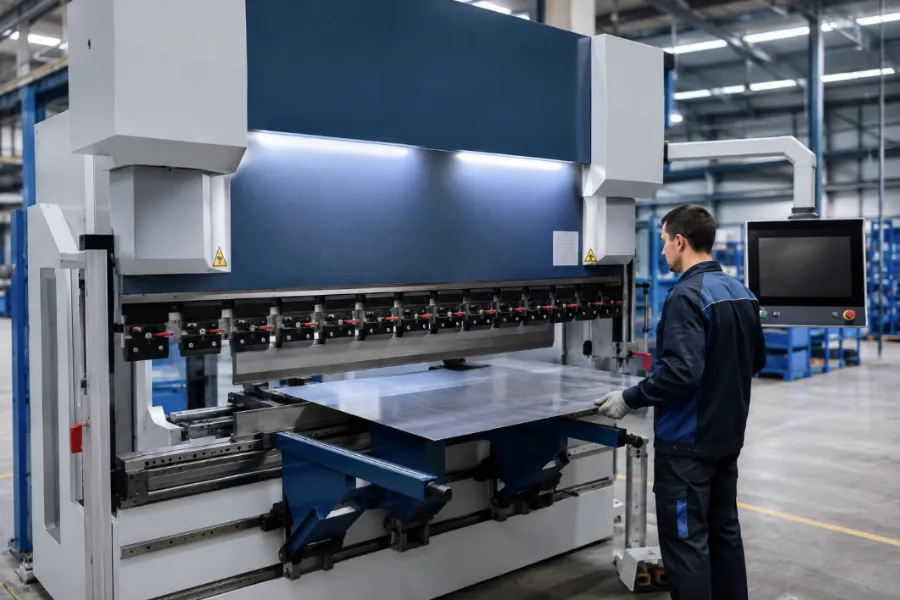
Choosing the right press brake starts with the parts you actually produce, not with the highest tonnage or the most CNC axes you can afford. A practical press brake selection process should consider material, thickness, bend length, part geometry, tooling, accuracy, and production volume before determining the machine configuration.
An oversized machine can add unnecessary cost and complexity, while an undersized one may restrict your sheet metal fabrication capabilities. The goal is to choose enough capacity for your real workload, with a reasonable margin for future production.
1. Start With the Parts You Actually Bend
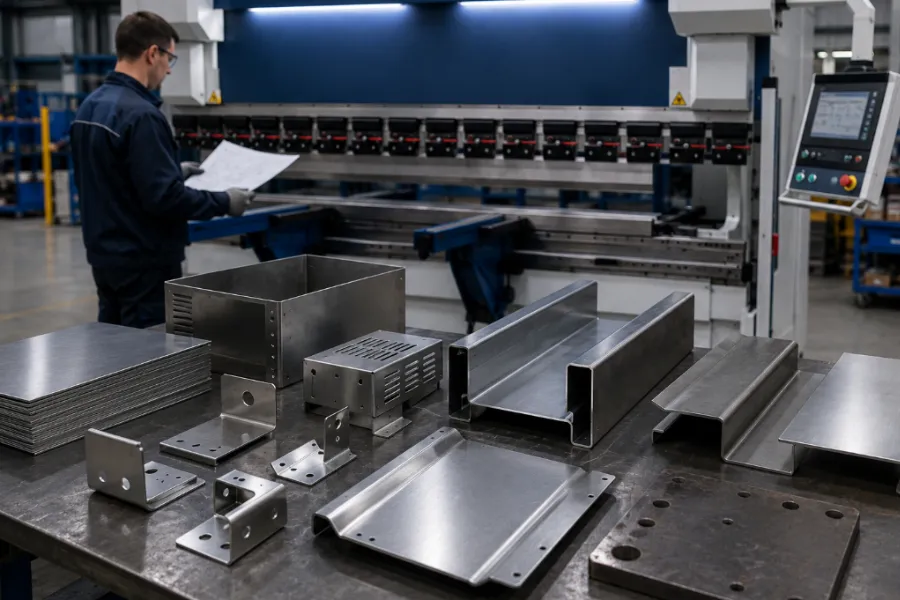
Before comparing machines, collect drawings for the parts that represent most of your production, along with several demanding parts you realistically expect to process.
Review these factors:
- Material grade and tensile strength
- Typical and maximum thickness
- Maximum bend length
- Inside bend radius
- Minimum flange length
- Bend angles and part geometry
- Holes or features near bend lines
- Surface requirements
- Required tolerances
- Batch size and production volume
Do not configure an entire machine around one unusually large job while making everyday production less efficient. Start with the parts that generate most of your workload, then decide how much additional capacity is commercially justified.
2. Calculate the Tonnage You Actually Need
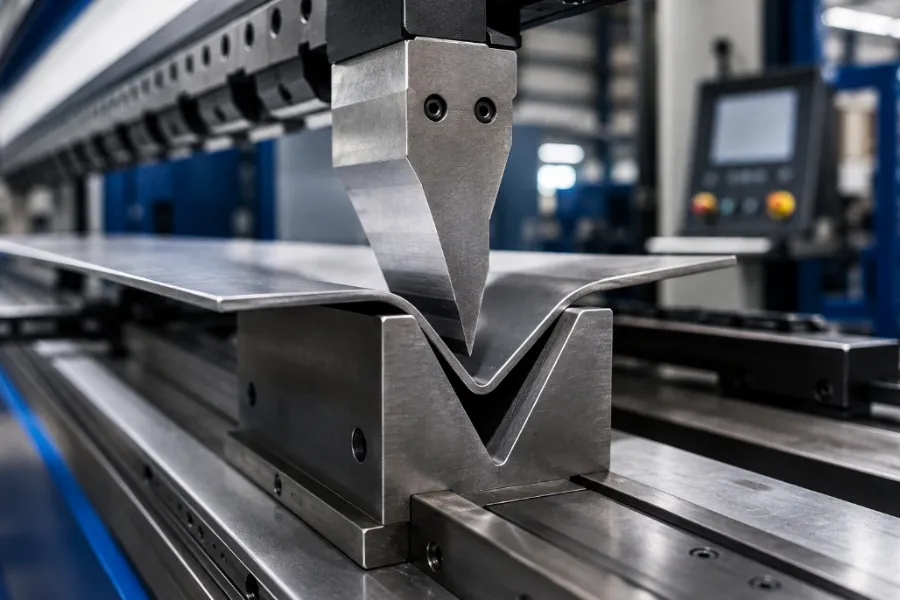
Required bending force depends primarily on material strength, thickness, bend length, V-die opening, and bending method.
Four relationships are especially useful:
- Force increases with bend length.
- Force increases approximately with the square of material thickness.
- Force increases with material tensile strength.
- Force decreases as the V-die opening becomes wider.
The general relationship can be expressed as:
P ∝ L × t² × σb / V
Where P is bending force, L is bend length, t is material thickness, σb represents tensile strength, and V is the V-die opening.
Thickness deserves particular attention. Under otherwise comparable conditions, doubling material thickness can increase the required force by approximately four times rather than simply doubling it.
Bending method also matters. Air bending generally requires less force than bottoming or coining, so establish the intended process before determining machine capacity.
Check Tooling Load as Well as Machine Tonnage
Machine capacity and tooling capacity are different limits.
A press brake may have enough total tonnage while a short punch or die segment is overloaded by concentrated force. Tooling is therefore commonly rated by line load, such as kN/m or tons per meter.
Verify both the required total machine force and the allowable load of the punch and die. Do not simply choose a much larger machine as a substitute for proper tooling and tonnage calculations.
3. Match Bending Length to Your Workpieces
Working length should accommodate the longest bend you realistically need to produce, but nominal bed length is only the starting point.
Consider the complete relationship:
Bend length → Part geometry → Column spacing → Throat depth → Part movement
Column spacing can determine whether large workpieces can pass between the frames. Throat depth matters when the sheet must extend farther behind the bending line, particularly for panels, boxes, doors, and parts with internal bends.
Also examine the bending sequence. A workpiece may fit the nominal bed length but interfere with the frame or tooling when it is rotated for the next bend.
Avoid significantly oversizing working length unless your expected production justifies the additional machine size, floor space, and investment.
4. Check the V-Die, Inside Radius, and Minimum Flange
The V-die opening affects bending force, natural inside radius, minimum flange, and tooling load at the same time.
For conventional air bending of thinner mild steel, a V-opening around 6–8 times material thickness is a common starting range. Thicker or higher-strength material may require a larger V/t ratio, while bottom bending and other forming methods follow different tooling requirements.
For conventional 90-degree air bending of typical mild steel, an inside radius around 0.15–0.16V can be used as a preliminary estimate. The actual natural radius also depends on material properties, thickness, bend angle, and tooling conditions.
For conventional V-die bending, minimum flange length is often estimated at approximately:
b ≈ 0.7V
This is also a preliminary guideline. Die shoulder radius, bend angle, material, and tooling geometry can change the actual minimum.
The important selection logic is:
Part geometry → Radius and flange → V-opening → Bending force → Machine and tooling capacity
A wider V generally reduces required force but increases the natural radius and minimum flange requirement. This trade-off should be checked before selecting the machine.
5. Make Sure the Tooling Can Produce the Part
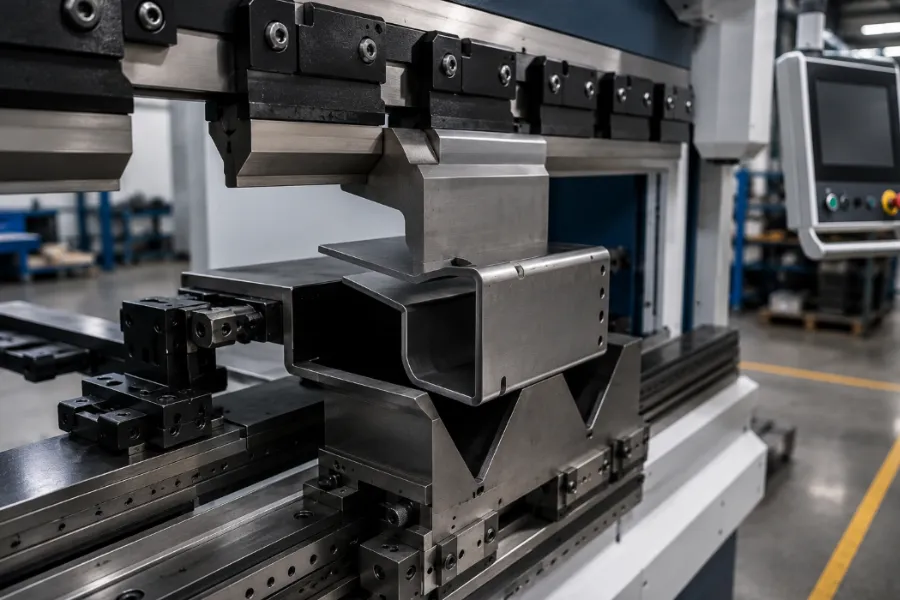
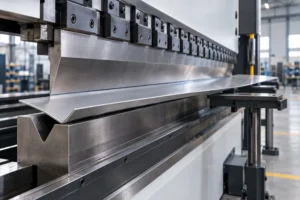
Machine capacity tells you whether enough force and working length are available. Tooling determines whether the required geometry can actually be formed.
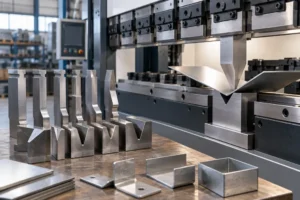
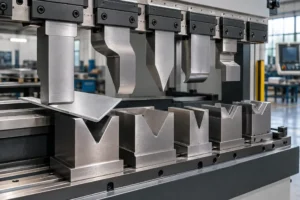
Review the complete bending sequence for punch-to-part interference. Boxes, channels, return flanges, and multi-bend parts may require gooseneck punches, segmented tooling, or special profiles.
Applications such as hemming, offset or Z bending, very small flanges, large-radius bending, and scratch-sensitive surfaces may also require dedicated tooling solutions.
Existing tooling should not automatically be assumed compatible with a new press brake. Check the clamping standard, punch and die geometry, tool height, condition, load rating, and available daylight.
6. Compare Hydraulic, Electric, and Hybrid Drive Systems
Once force, length, and tooling requirements are clear, compare drive technologies according to the actual production environment.
Hydraulic press brakes cover a broad range of general fabrication and high-force applications. Their trade-offs include hydraulic oil, filters, seals, and associated maintenance.
Servo-electric press brakes can provide fast response, precise motion control, lower idle energy use, and reduced hydraulic maintenance. They are worth evaluating for frequent thin-sheet and repetitive production, subject to available tonnage, working length, and investment requirements.
Hybrid or servo-hydraulic systems combine hydraulic force generation with servo-controlled operation and may provide a useful balance of force, response, and energy management.
There is no universally superior drive system. Compare required force, part mix, cycle requirements, maintenance resources, energy considerations, and total investment.
7. Decide How Much CNC and Backgauge Capability You Need
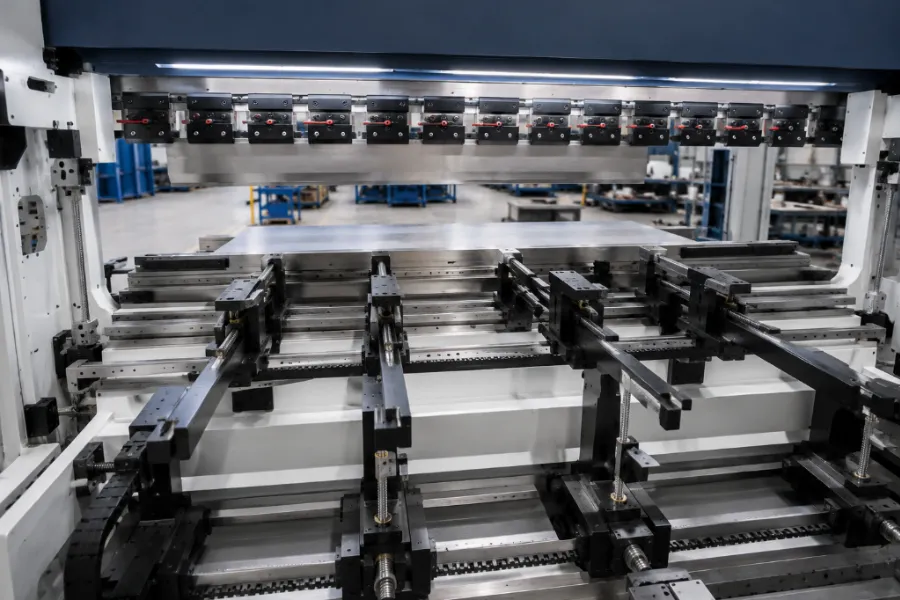
Backgauge configuration should follow part complexity rather than the number of axes advertised on the brochure.
The X-axis provides primary front-to-back positioning. An R-axis adjusts gauge height, while independently controlled Z1/Z2 axes can reposition gauge fingers laterally for asymmetric or different-width parts.
Simple repetitive flanges may need relatively basic positioning. Complex enclosures, multiple flange dimensions, and high-mix production can benefit from more flexible backgauge configurations.
Axis definitions can vary among manufacturers, so do not compare “4-axis” and “6-axis” claims alone. Confirm which movements are CNC controlled, whether axes operate independently, their available travel, and how the configuration supports your actual parts.
More axes add value when they reduce setups or positioning errors. Otherwise, they can add cost and programming complexity without improving the finished product.
8. Consider Accuracy, Crowning, and Repeatability
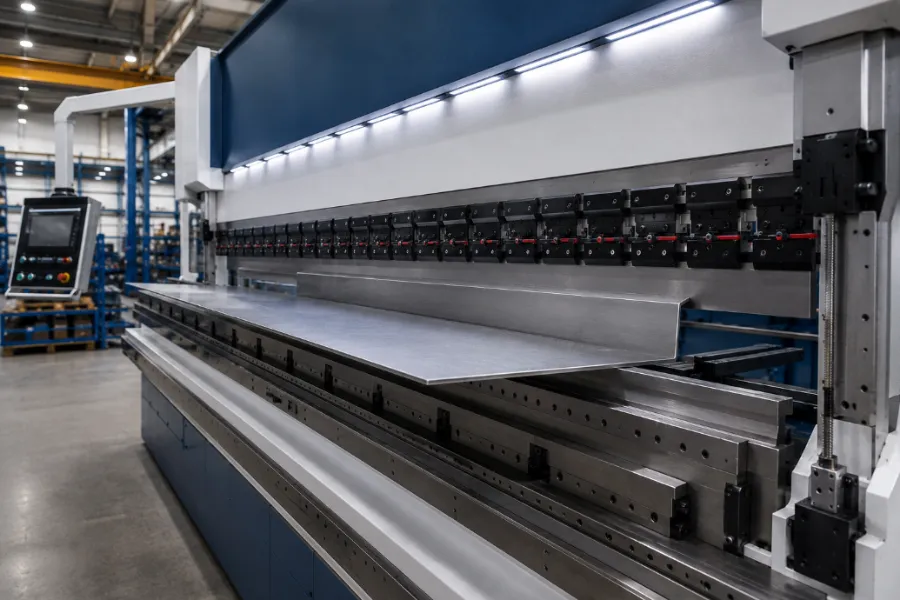
A sophisticated CNC controller alone does not guarantee bending accuracy.
Final results depend on the complete system:
Machine structure + Ram positioning + Backgauge + Tooling + Material variation + Crowning + Process control
Press brakes naturally deflect under load, particularly during longer bends. Without appropriate compensation, this can contribute to angle differences between the center and ends of a workpiece.
Crowning compensates for this deformation and becomes increasingly important as bending length, force, and accuracy requirements increase.
Instead of comparing controller specifications alone, define the tolerances required on your finished parts and evaluate how the complete machine maintains them.
9. Match the Machine to Production Volume and Workflow
A machine can be technically capable of bending a part without being the most productive machine for making it every day.
Consider:
- Typical batch size
- Setups per shift
- Tool-change frequency
- Operator skill
- Programming time
- Required cycle time
- Part size and weight
- Material handling
- Future automation
High-mix production may benefit more from faster programming and setup, while repetitive production may justify sheet followers, automated handling, or robotic integration.
Large workpieces can also require front supports, lifting assistance, or additional operators. These factors affect labor, throughput, and safety beyond the actual bending cycle.
10. Check Workshop and Installation Requirements
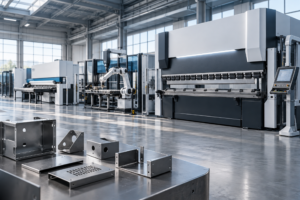
A machine’s catalog footprint does not represent all the space required for production.
Confirm machine dimensions and weight, working clearance, electrical supply, floor or foundation requirements, loading routes, maintenance access, and room for material movement.
Long sheets require enough space for positioning and rotation around the machine. Installation requirements can also change with machine size and force, so verify them for the exact configuration before ordering.
11. Evaluate the Manufacturer, Not Just the Machine
A press brake is a long-term production asset. The supplier should be able to explain why a specific tonnage, working length, tooling arrangement, backgauge, and control configuration fits your application.
Evaluate application support, machine testing, documentation, training, spare parts, warranty, technical assistance, and relevant safety or certification requirements for your target market. Machine evaluation should also consider press brake guarding, including how the point of operation, side access, and rear machine area are protected.
BENDORA can review representative drawings, materials, thickness ranges, bending lengths, tolerances, and production conditions before recommending a configuration. BENDORA operates a 32,000 m² manufacturing facility with 30+ engineers, performs 100% pre-shipment testing, and provides a 2-year warranty and 24/7 remote technical support, with CE and ISO 9001 certification.
12. Press Brake Selection Checklist
Prepare the following information before requesting a quotation:
| Information | What to Provide |
|---|---|
| Material | Mild steel, stainless steel, aluminum, etc. |
| Thickness | Typical and maximum |
| Bend length | Typical and maximum |
| Inside radius | Required radius |
| Minimum flange | Smallest flange |
| Geometry | Angles, boxes, channels, offsets, hems |
| Part drawing | 2D or 3D drawing if available |
| Accuracy | Angular and dimensional tolerances |
| Production | Batch size and expected output |
| Tooling | Existing and special tooling |
| Surface | Scratch-sensitive requirements |
| Automation | Current or future requirements |
| Workshop | Voltage, space, and installation conditions |
This information allows a manufacturer to evaluate the application instead of recommending a press brake based on tonnage alone.
Conclusion
Choosing the right press brake means working backward from the finished part. Material, thickness, bend length, radius, flange dimensions, geometry, and accuracy determine tooling requirements and bending force, which then determine the appropriate machine configuration.
After establishing those fundamentals, compare drive technology, CNC and backgauge capability, crowning, production workflow, installation conditions, and manufacturer support. The right machine is not necessarily the largest or most highly equipped one, but the configuration that produces your actual parts safely, consistently, and economically.
If you are evaluating a press brake, send BENDORA several representative part drawings along with the material, thickness range, maximum bend length, tolerance requirements, and expected production volume for a more application-specific machine recommendation.
FAQ
How do I know what tonnage press brake I need?
Required tonnage depends mainly on material tensile strength, thickness, bend length, V-die opening, and bending method. Under comparable conditions, bending force increases approximately with the square of material thickness.
Calculate the requirement for your demanding parts and verify both total machine capacity and tooling line-load limits.
Should I buy a press brake with more tonnage than I currently need?
A reasonable capacity margin can accommodate material variation and future work, but excessive tonnage is not automatically better. Compare additional capacity against your actual part mix, tooling, machine size, investment, and realistic future requirements.
How long should my press brake be?
Choose working length according to the longest required bend while also checking column spacing, throat depth, workpiece geometry, and bending sequence. Overall sheet length alone does not determine the required machine length.
How many CNC axes do I need?
Simple repetitive parts may need relatively basic positioning, while complex or asymmetric components can benefit from additional R and independent Z-axis control. Compare the actual functions of each axis rather than the advertised axis count.
Should I choose a hydraulic or electric press brake?
Hydraulic machines cover a broad range of general and heavy fabrication, while servo-electric systems are worth considering where response, repeatability, thin-sheet productivity, and reduced hydraulic maintenance are priorities. Choose according to force, working length, production mix, maintenance resources, and total investment rather than technology alone.