Top 10 Press Brake Manufacturers in the World
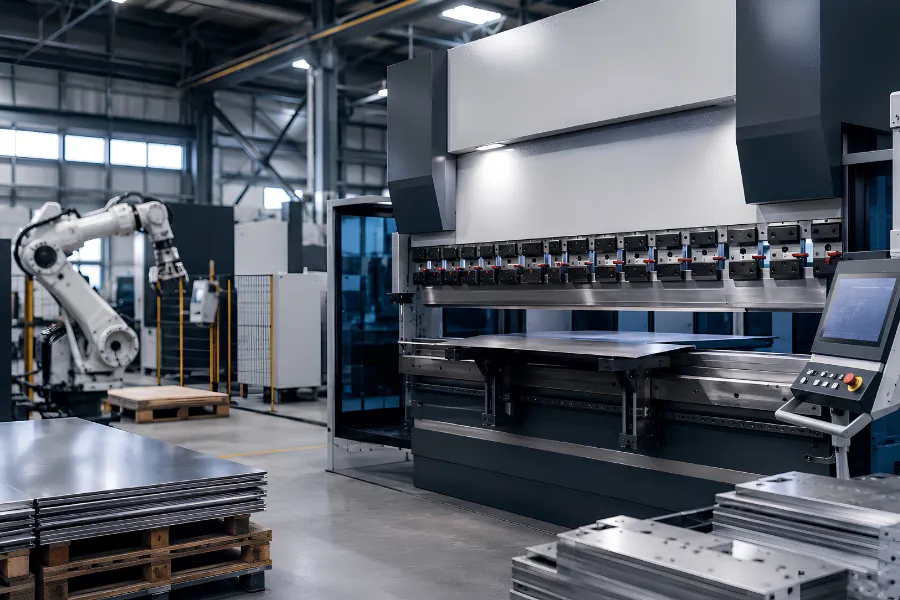
Table of Contents
Choosing among the world’s leading press brake manufacturers requires more than comparing tonnage, bending length, or machine price. Hydraulic, servo-electric, hybrid, automated, and heavy-duty systems can serve very different production environments.
This guide compares 10 established press brake manufacturers from an engineering and procurement perspective. The focus is on bending technology, CNC and automation, production flexibility, application fit, and supplier capability. The order is used to organize the comparison rather than represent a strict ranking by global market share or overall technical capability.
Press Brake Manufacturers at a Glance
| Manufacturer | Country | Main Focus | Suitable For |
|---|---|---|---|
| TRUMPF | Germany | Connected bending and automation | Smart factories and automated production |
| AMADA | Japan | High-mix bending and tool automation | Frequent job and tooling changes |
| Bystronic | Switzerland | Flexible CNC bending | Job shops and changing production mixes |
| LVD | Belgium | Adaptive bending technology | Applications sensitive to material variation |
| Prima Power | Italy | Servo-electric and integrated bending | Automated sheet metal production |
| SafanDarley | Netherlands | Servo-electric bending | Energy-conscious flexible production |
| Accurpress | Canada | Heavy-duty press brake systems | General fabrication and heavy forming |
| Durma | Türkiye | Broad sheet metal machinery portfolio | Buyers sourcing multiple machine types |
| Salvagnini | Italy | Flexible bending automation | Dynamic and high-mix production |
| BENDORA | China | Configurable press brake solutions | Buyers requiring application-based configurations |
How We Selected These Manufacturers
The manufacturers were evaluated according to their press brake portfolio, bending technology, CNC and automation capabilities, engineering differentiation, application coverage, and industrial support. Greater tonnage or more CNC axes were not treated as automatic indicators of a better machine.
The comparison instead considers how each manufacturer approaches real bending requirements such as setup reduction, material variation, flexible production, automation, heavy workpieces, and changing batch sizes. This makes the shortlist more useful for supplier evaluation than a simple comparison of specifications.
1. TRUMPF

Founded: 1923
Headquarters: Ditzingen, Germany
Website: www.trumpf.com
Specialization: Connected sheet metal manufacturing and automated bending
Main Products: TruBend press brakes, automated bending cells, bending centers, tooling, software, and factory automation
TRUMPF approaches press brake technology as part of a broader sheet metal production ecosystem. Its portfolio spans entry-level and large-format bending machines as well as automated bending cells, allowing bending to connect with tooling, programming, material flow, and other sheet metal processes.
This approach becomes relevant when the bending operation is no longer an isolated workstation and must interact with automation or digital production workflows.
Why Does TRUMPF Stand Out?
Bending Automation: TRUMPF offers automated cells and modular automation that can reduce manual handling and support autonomous production.
Automatic Setup: Systems such as ToolMaster Bend automate tooling setup, which can reduce non-productive time when configurations change.
Integrated Production: Its bending equipment can operate within a wider ecosystem of sheet metal machinery, software, tooling, and automation.
Suitable For: Manufacturers planning connected sheet metal production, automated bending cells, or broader smart-factory integration.
2. AMADA
Founded: 1946
Headquarters: Kanagawa, Japan
Website: www.amada.co.jp
Specialization: High-mix bending, tool automation, and integrated sheet metal processing
Main Products: CNC and hybrid press brakes, automatic tool changing systems, robotic bending systems, tooling, and sheet metal machinery
AMADA combines bending machines with tooling, automation, and other sheet metal processing technologies. One particularly recognizable direction is reducing setup dependency in high-mix production, where frequent tooling changes can consume a meaningful share of available production time.
Its HG-1003ATC, for example, combines a hybrid press brake with automatic tool changing, angle sensing, crowning, and back-gauge technologies for high-mix, small-batch production.
Why Does AMADA Stand Out?
Automatic Tool Changing: ATC systems automate a setup task that otherwise depends heavily on operator time and experience.
High-Mix Production: AMADA explicitly develops bending solutions around frequent changes in part type and batch requirements.
Process Integration: Bending sits within a wider portfolio of sheet metal processing equipment, tooling, and automation.
Suitable For: Job shops and manufacturers where frequent part changes, tooling changes, and small production batches make setup efficiency important.
3. Bystronic
Founded: 1964
Headquarters: Niederönz, Switzerland
Website: www.bystronic.com
Specialization: Flexible digital bending and configurable press brake systems
Main Products: CNC press brakes, heavy-duty bending systems, automated tool changing, bending cells, software, and sheet metal processing systems
Bystronic emphasizes flexibility across different press brake sizes, production requirements, and automation levels. Its current bending portfolio extends from compact solutions to heavy-duty machines, while modular configurations allow manufacturers to adapt equipment to different production environments.
This is useful for job shops and OEM manufacturers where batch size, workpiece geometry, and production priorities can change over time.
Why Does Bystronic Stand Out?
Configurable Bending: Modular machine configurations allow the press brake to be adapted around different production requirements.
Tool Change Automation: Automatic tool changing can reduce setup time while lowering the risk of incorrect tool installation.
Wide Application Range: Its portfolio covers compact bending through larger heavy-duty applications.
Suitable For: Job shops and OEMs that need flexible CNC bending with room to adapt machine configuration or automation as production changes.
4. LVD

Founded: 1952
Headquarters: Gullegem, Belgium
Website: www.lvdgroup.com
Specialization: Adaptive bending and process control
Main Products: Hydraulic and electric press brakes, adaptive bending systems, robotic bending, XXL systems, tooling, and sheet metal machinery
LVD has a particularly clear technical identity around adaptive bending. Its Easy-Form system measures the bending process and compensates for variables including sheet thickness, strain hardening, and grain direction, rather than relying only on a fixed programmed ram position.
That distinction matters when material variation makes first-piece accuracy and repeatable angles more difficult to maintain across production.
Why Does LVD Stand Out?
Adaptive Bending: Easy-Form Laser measures bend angles and sends correction information to the CNC during the bending process.
Material Compensation: The system is designed to respond to variation in thickness and material behavior.
Broad Bending Applications: LVD covers conventional press brake applications as well as automated and large-format bending requirements.
Suitable For: Manufacturers where material variation, bend-angle consistency, or demanding forming requirements make adaptive process control valuable.
5. Prima Power
Founded: 1977
Headquarters: Turin, Italy
Website: www.primapower.com
Specialization: Servo-electric bending and integrated sheet metal automation
Main Products: Servo-electric press brakes, hydraulic press brakes, automated bending systems, robotic cells, laser cutting, punching, and production systems
Prima Power combines press brakes with a wider automated sheet metal manufacturing portfolio. Its bending range includes servo-electric eP machines for medium-thin sheet applications and hydraulic hP systems for applications requiring higher forming force.
The practical distinction is the ability to select the bending architecture according to the workpiece while still considering integration with robotic cells or wider production lines.
Why Does Prima Power Stand Out?
Servo-Electric Expertise: The eP series focuses on servo-electric bending for applications requiring responsive and flexible sheet metal processing.
High-Tonnage Options: The hP range extends the portfolio toward hydraulic high-force bending.
Production Integration: Press brakes can be incorporated into robotic cells and automated manufacturing lines.
Suitable For: Manufacturers that want bending equipment to operate as part of a broader automated sheet metal production system.
6. SafanDarley
Founded: 1932
Headquarters: Lochem, Netherlands
Website: safandarley.com
Specialization: Servo-electric and hydraulic bending systems
Main Products: E-Brake servo-electric press brakes, H-Brake hydraulic press brakes, hybrid systems, and automatic bending systems
SafanDarley is closely associated with servo-electric press brake technology through its E-Brake product family, while its portfolio also includes hydraulic, hybrid, and automated bending systems. This gives buyers several drive architectures rather than forcing every application into the same machine concept.
The choice is therefore less about whether electric or hydraulic is universally better and more about matching forming force, workpiece size, production pattern, and operating priorities.
Why Does SafanDarley Stand Out?
Servo-Electric Focus: The E-Brake family gives SafanDarley a distinct position in electric bending.
Multiple Drive Options: Hydraulic and hybrid systems extend the portfolio beyond servo-electric applications.
Automation Options: The company also offers automatic bending systems for production environments where reducing manual intervention is justified.
Suitable For: Manufacturers evaluating servo-electric bending while still wanting hydraulic, hybrid, or automated alternatives within the same supplier portfolio.
7. Accurpress
Founded: 1973
Headquarters: Canada
Website: www.accurpress.com
Specialization: Rugged CNC and heavy-duty press brake systems
Main Products: CNC press brakes, rocker-arm press brakes, heavy forming configurations, controls, and machine upgrades
Accurpress has a strong North American fabrication identity centered on robust press brake construction and a wide range of forming applications. Its Advantage line is positioned for work ranging from sheet metal to heavy plate and is available with different tonnage and custom configuration options.
This makes the brand relevant when buyers prioritize durable forming equipment, straightforward production capability, and the ability to upgrade control or gauging functions over the machine’s service life.
Why Does Accurpress Stand Out?
Heavy Fabrication Orientation: Its machines address both general sheet metal and heavier forming requirements.
Upgradeable Controls: Control and gauging options can extend machine capability as production requirements change.
Tooling Flexibility: Available tooling and clamping configurations support different fabrication practices.
Suitable For: Fabricators looking for robust press brake platforms for general-purpose or heavier forming applications.
8. Durma
Founded: 1956
Headquarters: Bursa, Türkiye
Website: www.durmazlar.com.tr
Specialization: Broad sheet metal machinery and bending solutions
Main Products: Press brakes, laser cutting machines, shears, punching systems, bending equipment, and automation
Durma differs from manufacturers focused narrowly on one bending architecture because it operates across a broad range of sheet metal machinery. Its press brake offering sits alongside cutting, shearing, punching, and other fabrication technologies.
For buyers building or expanding a complete sheet metal workshop, that breadth can simplify supplier evaluation across multiple process stages. The actual press brake configuration should still be selected according to material, bending length, required force, tooling, control, and production volume rather than portfolio size alone.
Why Does Durma Stand Out?
Broad Machinery Portfolio: Buyers can evaluate bending alongside other sheet metal processing equipment.
Multiple Bending Requirements: The product direction covers conventional CNC bending as well as more specialized production needs.
Workshop-Level Sourcing: A broad equipment portfolio can be useful when several fabrication processes are being purchased or upgraded together.
Suitable For: Fabricators seeking press brakes as part of a broader sheet metal machinery investment.
9. Salvagnini
Founded: 1963
Headquarters: Sarego, Italy
Website: www.salvagninigroup.com
Specialization: Flexible bending automation and adaptive production
Main Products: B3 press brakes, panel benders, bending automation, laser systems, punching systems, software, and flexible manufacturing systems
Salvagnini develops its B3 press brake around flexible production rather than treating automation as a fixed all-or-nothing configuration. The B3 combines electric and hydraulic design concepts with adaptive technologies, software, and scalable automation.
This approach is particularly relevant as batch sizes shrink and manufacturers need to manage more frequent product changes without allowing setup and programming time to dominate production.
Why Does Salvagnini Stand Out?
Scalable Automation: Automation can be configured around changing production requirements rather than requiring the same automation level for every application.
Adaptive Technologies: Systems such as S-CROWNING and angle measurement support process consistency and reduce operator-dependent corrections.
Software Integration: Production and programming software connect bending with wider manufacturing workflows.
Suitable For: High-mix and dynamic production environments where flexibility, setup reduction, and scalable automation are important.
10. BENDORA
Founded: 15+ years of industry experience
Headquarters: China
Website: lzhlzhlzh.site
Specialization: Configurable press brake solutions for international B2B buyers
Main Products: CNC hydraulic, servo-electric, hybrid, tandem, heavy-duty, and custom press brake solutions
BENDORA focuses on configuring press brake solutions around the buyer’s workpiece and production requirements. Its product direction covers several machine architectures, allowing material type, thickness, bending length, required force, production volume, and automation needs to guide the machine selection rather than starting from a single fixed platform.
The company operates a 32,000 m² manufacturing facility, exports to more than 45 countries, and applies 100% pre-shipment testing. These capabilities support international buyers who need both machine configuration and export-oriented supplier support.
Why Does BENDORA Stand Out?
Configuration Range: Hydraulic, electric, hybrid, tandem, heavy-duty, and custom directions allow the machine architecture to follow the application.
Engineering-Oriented Selection: Machine recommendations can begin with workpiece variables such as material, thickness, bending length, geometry, and production requirements.
Export Support: Pre-shipment testing and international market experience are relevant to buyers sourcing press brakes across borders.
Suitable For: International fabricators, distributors, and OEM buyers seeking configurable press brake solutions based on specific bending requirements.
How to Choose a Press Brake Manufacturer
The right manufacturer is not necessarily the company with the most advanced machine or the largest available tonnage. Start with the parts you need to produce, then evaluate which supplier and machine architecture solve those requirements without adding unnecessary capacity or complexity.
Step A — Match Machine Capacity to Your Workpiece
Start with the part, not the machine brand.
Material type, maximum thickness, bending length, flange geometry, bend radius, and tooling influence the required machine capacity. A machine that is significantly oversized may increase investment without improving the parts you actually need to produce.
Check Before Buying: Material → Thickness → Bending Length → Required Tonnage → Tooling
Buyer Takeaway: Define your maximum workpiece requirements before comparing press brake models.
Step B — Choose the Right Drive Technology
Hydraulic, servo-electric, and hybrid systems solve different production requirements.
Hydraulic press brakes cover a broad range of forming applications, while servo-electric systems can be attractive for repetitive sheet metal production where their drive characteristics match the required force and workpiece size. Hybrid systems combine characteristics of hydraulic and electric architectures, while tandem or heavy-duty configurations may be required for long or high-force workpieces.
Buyer Takeaway: Select the drive system around your parts and production pattern rather than assuming the newest technology is automatically better.
Step C — Evaluate Accuracy, CNC, and Tooling Together
Bending accuracy is a system-level result.
Material variation, springback, machine deflection, V-die opening, punch and die condition, crowning, back-gauge positioning, angle correction, and operator setup can all influence the finished bend. A more advanced CNC does not remove these physical variables.
Check Before Buying: Back Gauge → Crowning → Tooling → Angle Control → Programming
Buyer Takeaway: Pay for CNC axes and accuracy-control features that solve real part and setup requirements.
Step D — Match Automation to Production Volume
Automation should remove a measurable bottleneck.
Robotic bending can reduce repetitive handling, while automatic tool changing can be valuable when frequent job changes make setup time a significant part of the production cycle. For low-volume work with highly variable parts, flexible manual operation may still be more practical.
Buyer Takeaway: Evaluate automation using batch size, setup frequency, labor requirements, part consistency, and expected machine utilization.
Step E — Compare Service and Total Cost of Ownership
The lowest machine quotation does not necessarily produce the lowest long-term cost.
Compare tooling, software, installation, operator training, maintenance, spare parts, technical support, warranty, and potential downtime alongside the initial machine price. For imported equipment, the availability of remote support and replacement parts deserves particular attention.
Buyer Takeaway: Compare lifecycle support and production risk together with the purchase price.
Which Manufacturer Fits Your Production?
| Production Requirement | Manufacturers to Consider | Why |
|---|---|---|
| Connected smart factory | TRUMPF | Strong integration of bending, automation, software, and material flow |
| High-mix, small-batch bending | AMADA, Salvagnini | Setup reduction and flexible automation |
| Flexible CNC job-shop production | Bystronic | Configurable bending and automation options |
| Material-sensitive angle control | LVD | Adaptive bending technology |
| Integrated automated sheet metal production | Prima Power | Bending integrated with wider production systems |
| Servo-electric bending | SafanDarley, Prima Power | Clear servo-electric product focus |
| Heavy fabrication | Accurpress | Robust forming platforms and heavy-fabrication orientation |
| Multi-machine workshop sourcing | Durma | Broad sheet metal machinery portfolio |
| Application-specific machine configuration | BENDORA | Hydraulic, electric, hybrid, tandem, heavy-duty, and custom directions |
This matrix should be used as a starting point rather than a substitute for part-level evaluation. The final machine decision still depends on the material, geometry, tolerance, production volume, tooling, automation requirements, and service expectations of the individual project.
What Information Should You Prepare Before Requesting a Quote?
A useful press brake quotation should begin with the workpiece rather than only a requested tonnage. Providing more complete production information allows the manufacturer to evaluate force, working length, tooling, CNC axes, and automation more accurately.
Prepare the following information where possible:
- Material type and grade
- Minimum and maximum sheet thickness
- Maximum bending length
- Part drawings or 3D files
- Flange dimensions and bend geometry
- Required bend angles and tolerances
- Typical batch size and annual production volume
- Tooling requirements
- Back-gauge and CNC requirements
- Automation or robotic bending requirements
- Local electrical standards and installation conditions
For unusual geometries, long workpieces, heavy plate, or automated production, sending actual part drawings is usually more useful than requesting a machine based only on nominal tonnage.
Conclusion
The major press brake manufacturers follow different engineering strategies. TRUMPF emphasizes connected manufacturing, AMADA focuses strongly on high-mix setup efficiency, LVD develops adaptive bending, Salvagnini emphasizes flexible automation, while other manufacturers differentiate through servo-electric technology, heavy fabrication, broad machinery portfolios, or configurable machine solutions.
The right choice therefore starts with the workpiece and production process, not the brand name. Buyers should define material, thickness, bending length, geometry, production volume, accuracy requirements, and automation goals before comparing machines.
For an application-specific evaluation, BENDORA buyers can provide part drawings and bending requirements so the machine configuration can be assessed around the actual production task.
FAQ
Who are the major press brake manufacturers?
Major international press brake manufacturers include TRUMPF, AMADA, Bystronic, LVD, Prima Power, SafanDarley, Accurpress, Durma, Salvagnini, and BENDORA. They differ in areas such as automation, adaptive bending, servo-electric technology, heavy-duty capability, and configurable machine solutions.
What should I compare when choosing a press brake manufacturer?
Start with machine capacity, bending technology, tooling, CNC and back-gauge capability, accuracy-control systems, automation, service, spare parts, and total cost of ownership. These factors should be evaluated against your actual parts and production volume.
Is a hydraulic or electric press brake better?
Neither technology is universally better. Hydraulic press brakes cover a broad range of forming requirements, while servo-electric machines can suit applications where their force range, workpiece size, cycle characteristics, and operating requirements align with production needs.
How many CNC axes does a press brake need?
The required number depends on part geometry and positioning requirements. Simple parts may not benefit from a highly complex back gauge, while multi-bend or asymmetric components may justify additional axes for faster and more accurate positioning.
When is press brake automation worth considering?
Automation becomes more attractive when repetitive handling, frequent setup, labor availability, or production volume creates a measurable bottleneck. High-mix production may benefit from automatic tool changing, while stable repetitive parts may justify robotic bending.
What information does a press brake manufacturer need for an accurate quotation?
Provide material type, thickness range, maximum bending length, part drawings, bend geometry, tolerance requirements, batch size, production volume, tooling needs, and automation requirements. These inputs allow the supplier to recommend machine capacity and configuration more accurately.