Address
304 North Cardinal St.
Dorchester Center, MA 02124
Work Hours
Monday to Friday: 7AM - 7PM
Weekend: 10AM - 5PM
Address
304 North Cardinal St.
Dorchester Center, MA 02124
Work Hours
Monday to Friday: 7AM - 7PM
Weekend: 10AM - 5PM
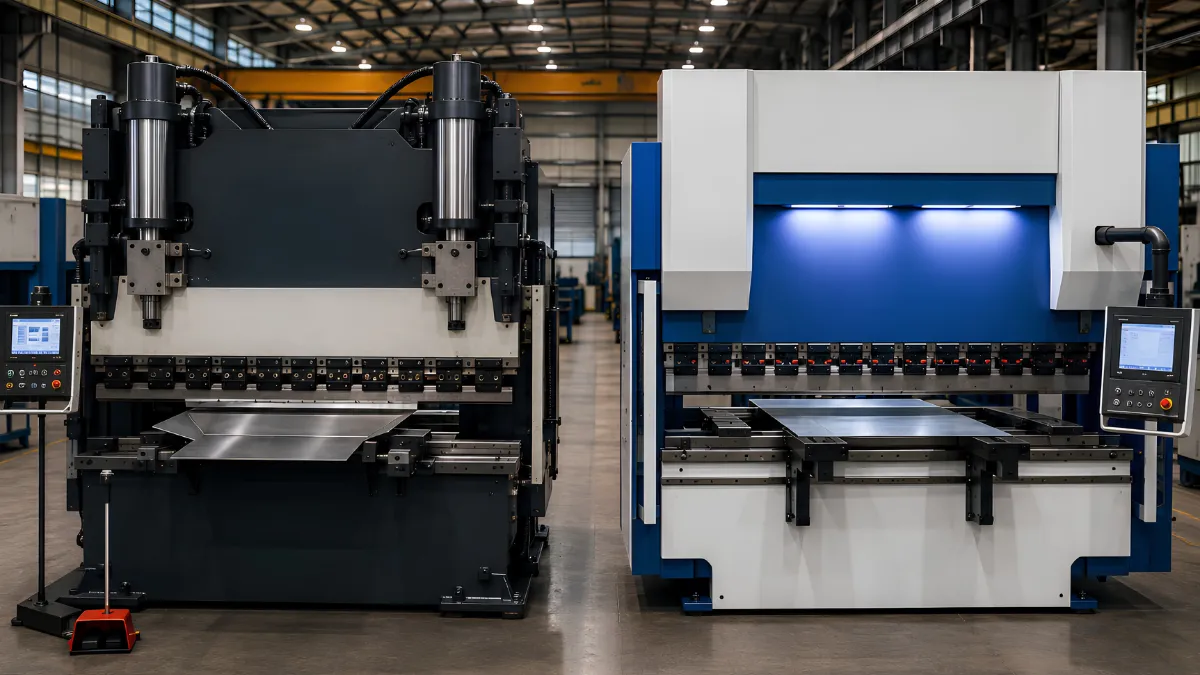
Choosing between a hydraulic and electric press brake is not simply a matter of deciding which technology is newer. The right choice depends on the material you bend, required force, part size, accuracy expectations, production mix, and operating priorities.
Electric press brakes are attractive for fast response, precise positioning, lower idle energy use, and reduced hydraulic maintenance. Hydraulic press brakes remain a strong choice for high-force bending, long workpieces, heavy-duty applications, and production requiring broad machine configurations.
The better machine is the one that matches your actual bending requirements.
The main difference is how each machine generates and controls ram movement. That drive architecture affects force capacity, response, energy use, maintenance, and application suitability.
| Factor | Hydraulic Press Brake | Electric Press Brake |
|---|---|---|
| Drive system | Hydraulic cylinders and pressurized fluid | Servo motors with mechanical transmission |
| Bending force | Strong choice for high-force applications | Often favored for light to medium-duty work |
| Response | Depends on hydraulic flow and control | Fast servo response |
| Repeatability | High with modern CNC and feedback systems | Strong positional repeatability |
| Energy use | Depends on hydraulic architecture and duty cycle | Primary drive uses energy mainly during movement |
| Maintenance | Oil, filters, seals, valves, and related components | No primary hydraulic circuit |
| Working environment | Hydraulic oil and system noise must be managed | No hydraulic oil and generally quieter |
| Typical fit | Heavy, long, high-force work | Precision and high-mix production |
These are general differences, not universal rules. Machine design, control technology, tooling, workpiece geometry, and configuration all influence actual performance.
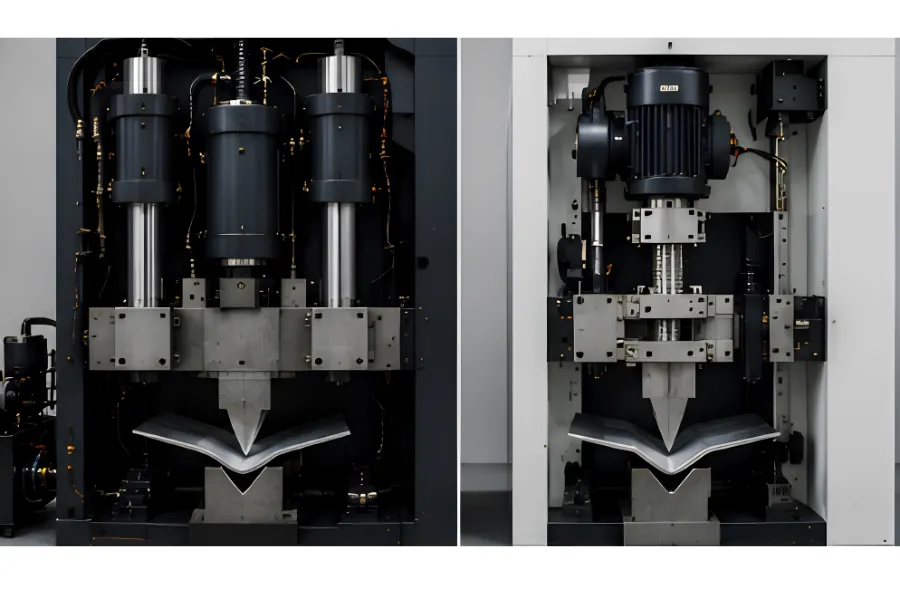
A hydraulic press brake uses a motor and pump to create hydraulic pressure. Valves regulate oil flow and pressure, while cylinders move the ram and punch to apply the required bending force.
Modern CNC hydraulic machines can incorporate servo-hydraulic control, position feedback, CNC crowning, and multi-axis back gauges. These technologies allow modern hydraulic press brakes to achieve precise control while retaining the high-force capabilities of hydraulic drive systems.
An electric press brake uses servo motors to control ram movement through a mechanical transmission system such as ball screws or belts, depending on the machine design.
Removing the primary hydraulic circuit changes how the machine responds and consumes energy. Servo control can provide fast positioning and strong repeatability while eliminating hydraulic oil and much of the maintenance associated with hydraulic components.
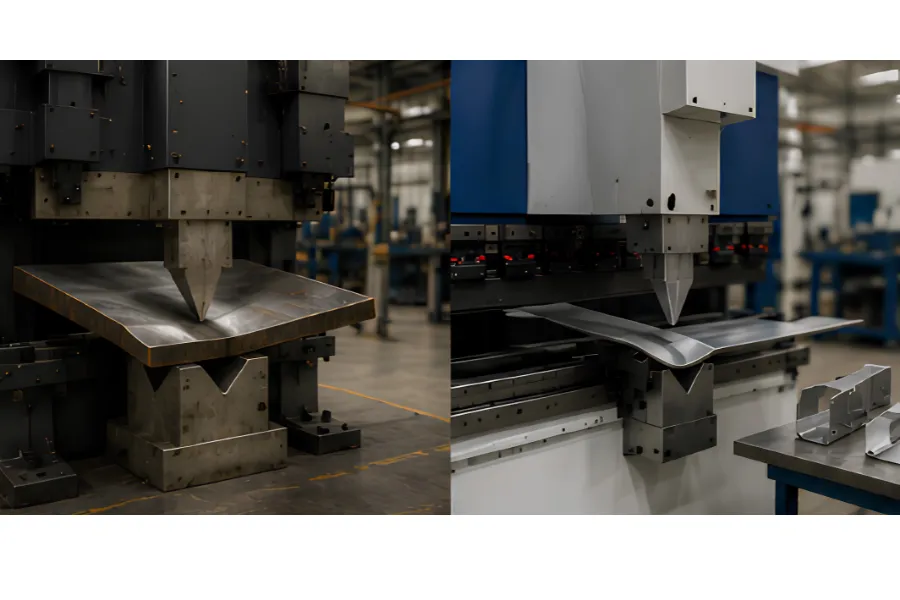
Start with bending force rather than drive technology.
Required tonnage depends on material strength, sheet thickness, bending length, V-die opening, and bending method. Increasing thickness or bending length can substantially increase the force the machine must provide.
Hydraulic press brakes are widely used when applications require high bending force, long working lengths, or heavy-duty forming. Electric machines are often attractive when force requirements are moderate and productivity depends more on response and frequent machine movement.
For example, a shop producing small stainless-steel enclosures may benefit more from electric response and repeatability than maximum tonnage. A fabricator bending long structural components may reach the opposite conclusion.
The correct selection sequence is therefore:
Material → Thickness → Bending Length → Tooling → Required Force → Machine Capacity
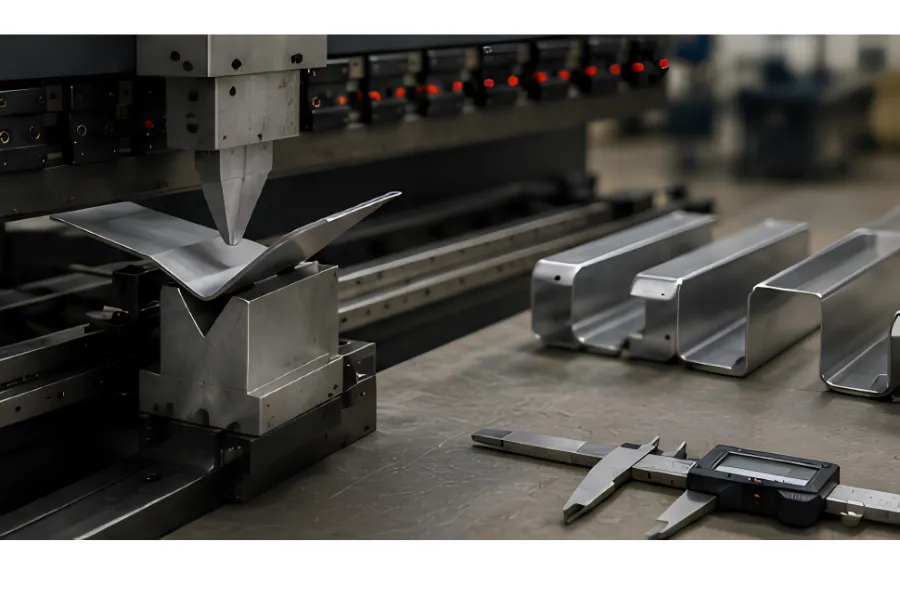
Electric press brakes can provide excellent positional repeatability because servo motors directly control machine movement. This is useful for repetitive production where consistent ram positioning matters.
Modern hydraulic machines can also achieve high levels of control through servo-hydraulic systems, encoders, CNC crowning, and advanced back gauges.
However, machine repeatability is not the same as finished bend accuracy.
Actual bending results are also affected by material variation, springback, punch and die condition, V-die opening, machine deflection, part length, and setup. Even a highly repeatable machine cannot eliminate variation in the material itself.
This distinction matters when comparing specifications. A very small ram positioning tolerance should not automatically be interpreted as the tolerance of every finished bent part.
Servo-electric drives can respond quickly during approach, positioning, and return movements. These time savings become more valuable when a part requires many bends or production involves frequent cycles.
Hydraulic systems depend on fluid flow, pressure control, and cylinder movement. Modern control technology has improved their speed considerably, but their motion characteristics remain different from a direct servo-electric system.
Still, machine speed is not the same as production throughput.
If most cycle time is spent loading large sheets, rotating parts, changing tooling, or positioning complex workpieces, increasing ram speed may produce only a limited improvement in parts per hour.
Evaluate the complete bending cycle, not just the maximum approach or return speed listed on a specification sheet.
Hydraulic and electric press brakes use energy differently.
A hydraulic machine uses an electric motor to power its hydraulic system. Actual consumption varies with pump technology, machine state, bending load, idle time, and control architecture. Hydraulic operation can also generate heat that may require additional temperature management.
An electric press brake uses servo motors to generate movement as required. During idle periods, demand from the primary drive can be reduced because the system does not need a conventional hydraulic pump continuously maintaining operation.
However, modern servo-hydraulic systems can reduce many of the idle losses associated with older hydraulic designs. It is therefore misleading to apply one fixed energy-saving percentage to every hydraulic versus electric comparison.
Compare actual machine power requirements against your operating hours, idle time, duty cycle, and local electricity cost.
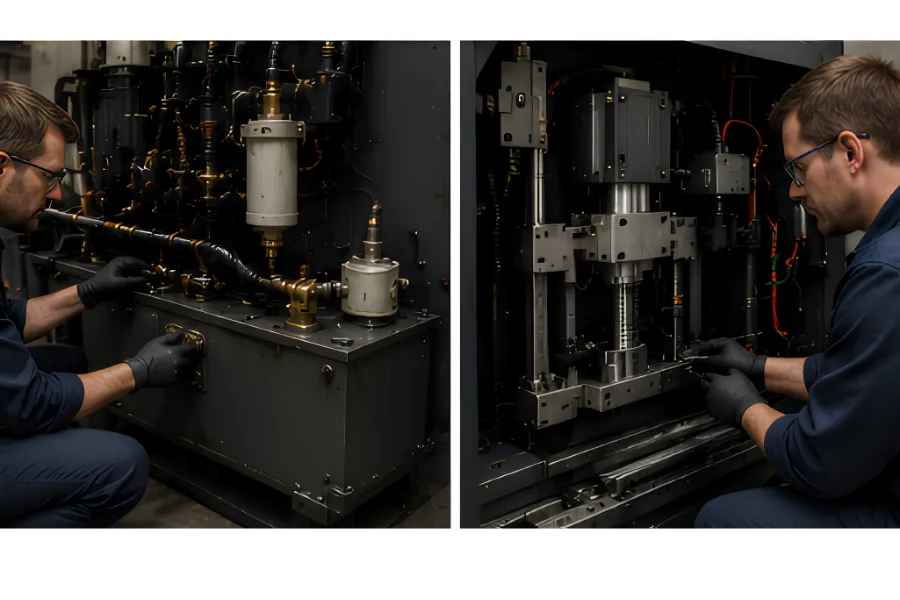
Hydraulic press brake maintenance can involve oil, filters, seals, valves, hoses, lubrication, temperature management, and inspection for leaks or declining system performance.
Routine inspection matters because machine condition may deteriorate before complete failure occurs. Pressure behavior, component wear, or other changes can gradually affect performance and bending consistency.
Electric press brakes remove the primary hydraulic circuit, eliminating hydraulic oil changes and related leakage concerns. However, they are not maintenance-free.
Servo motors, transmission components, guides, lubrication points, electrical systems, and safety devices still require inspection and maintenance.
The practical question is which maintenance structure better fits your plant’s technical capabilities, service access, and downtime strategy.
Electric press brakes do not require hydraulic oil for their primary drive, removing the associated leakage risk. They can also reduce continuous background noise associated with hydraulic power systems.
These characteristics can be particularly useful in precision sheet metal facilities, cleaner production areas, or workshops operating multiple bending machines close to employees.
For heavy fabrication, however, force capacity, workpiece handling, and machine configuration may matter much more than noise. The importance of this advantage depends on the production environment.
Initial purchase price should not be evaluated in isolation.
Electric press brakes may require a higher initial investment than some comparable hydraulic configurations. That premium may be justified when frequent cycles, reduced hydraulic maintenance, energy management, or productivity improvements generate meaningful savings over time.
A practical evaluation should consider:
TCO = Purchase Cost + Energy + Maintenance + Consumables + Downtime − Productivity Gains
A machine operating across multiple shifts has a very different cost profile from one used only several hours per week. Use your own operating hours, electricity rates, maintenance practices, and production volumes rather than generic long-term savings claims.
A hydraulic press brake is a strong candidate when bending force and machine capacity dominate the decision.
Typical conditions include thicker materials, long bending lengths, heavy components, and applications requiring substantial tonnage. Hydraulic platforms can also support extensive configurations involving stroke, daylight, tooling, clamping, back gauges, sheet supports, and automation.
Consider hydraulic when:
Modern servo-hydraulic control, CNC crowning, and position feedback also mean that choosing hydraulic does not necessarily mean sacrificing bending control.
Electric press brakes are particularly attractive when production emphasizes frequent cycles, positioning repeatability, fast response, and reduced hydraulic maintenance.
Typical applications include precision sheet metal components, enclosures, smaller fabricated parts, and high-mix production where jobs change frequently.
Consider electric when:
Capacity must still come first. The machine needs sufficient bending force, working length, stroke, tooling compatibility, and working envelope before its operational advantages become relevant.
A hybrid press brake combines servo control with hydraulic force generation. Different designs use this combination in different ways, but the general objective is to improve response and reduce unnecessary hydraulic energy use while retaining useful hydraulic force characteristics.
Hybrid technology can be attractive for mixed workloads where neither conventional hydraulic nor pure electric architecture is an obvious fit.
The trade-off is complexity. Hybrid machines still contain hydraulic components while adding servo technology. Maintenance capability, replacement parts, supplier support, and long-term service requirements should therefore be considered alongside energy and performance benefits.
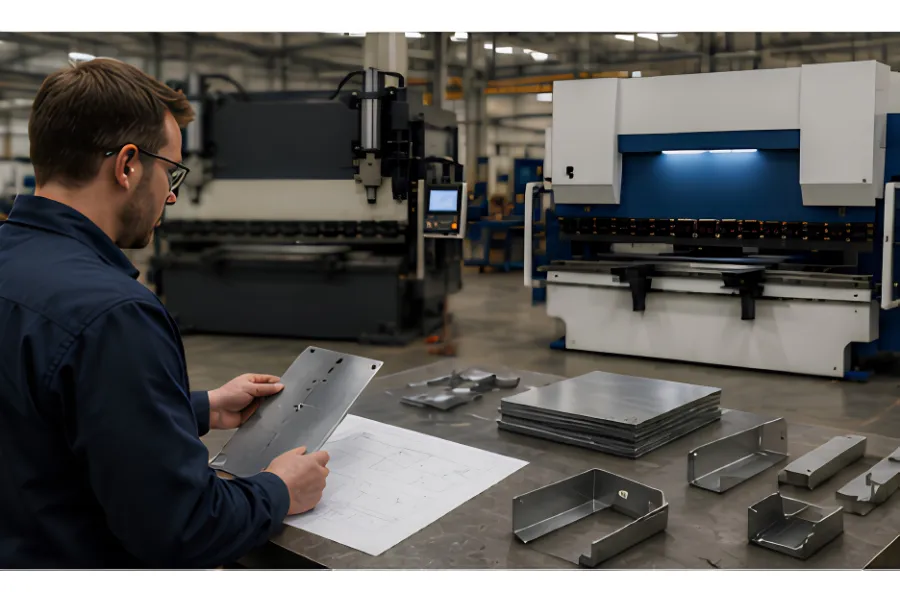
Start with the workpiece, not the machine brochure.
Determine the material, tensile strength, maximum thickness, and bending length. Then evaluate the V-die opening, tooling, part geometry, and required bending force to establish the machine capacity you actually need.
After that, evaluate production conditions:
A practical decision path is:
Workpiece → Bending Force → Machine Capacity → Production Pattern → Drive Technology
This approach prevents a common purchasing mistake: choosing electric or hydraulic first and only afterward checking whether the machine actually fits the parts.
Electric machines can provide excellent positional repeatability, but modern CNC hydraulic machines can also deliver precise control. Finished bend accuracy depends on material behavior, springback, tooling, deflection, setup, and other factors beyond the drive system.
Electric press brakes generally reduce primary-drive consumption during idle periods. Actual savings depend on workload and machine architecture, while modern servo-hydraulic systems can also improve energy efficiency compared with conventional hydraulic designs.
Possibly, if the required force falls within the machine’s capacity. Material strength, thickness, bending length, V-die opening, and bending method should be used to determine tonnage rather than thickness alone.
Hydraulic press brakes are widely used for high-force and heavy-duty bending. The final selection should still account for working length, tooling, stroke, part geometry, and actual required tonnage.
There is no universal winner in the hydraulic vs electric press brake comparison.
Electric press brakes make sense when fast response, positional repeatability, frequent cycles, energy management, and reduced hydraulic maintenance have high value. Hydraulic press brakes remain highly relevant when substantial bending force, long workpieces, heavy-duty operation, or extensive machine configuration drives the decision.
Choose the workpiece first, production requirements second, and drive technology third.
If you are evaluating a machine for a specific application, send BENDORA your material, thickness, maximum bending length, part drawing, required accuracy, and expected production volume. These details provide a better basis for selecting the appropriate press brake configuration than choosing between hydraulic and electric technology in isolation.